Call Us!
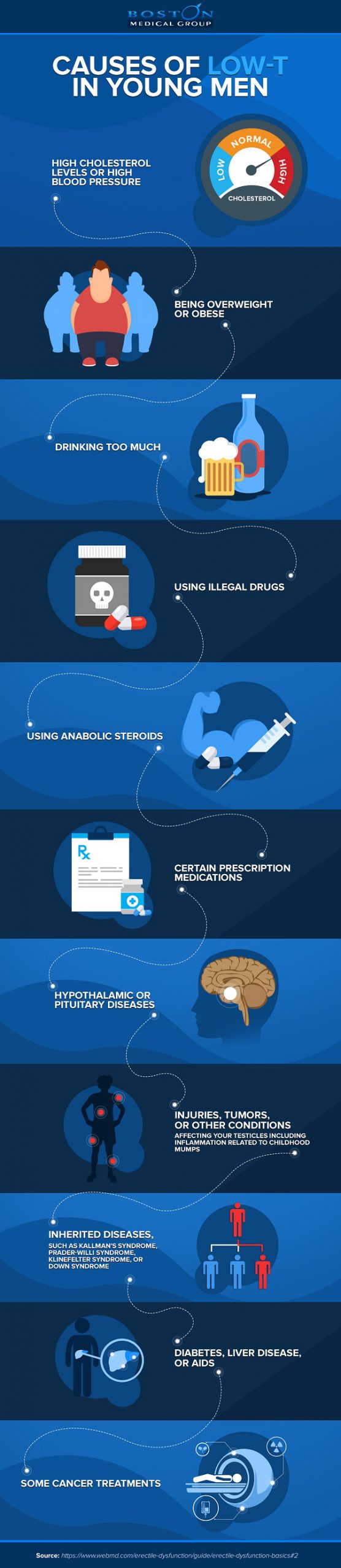
Low testosterone is often thought of as a condition that affects older men, but in recent years, more young men with low testosterone have been diagnosed with symptoms of hormone imbalance. This shift has raised concerns among healthcare providers, as testosterone plays a critical role in overall health, sexual function, and long-term well-being.
Testosterone is the primary male sex hormone, responsible for regulating muscle mass, body fat distribution, mood, energy levels, and sexual function. When testosterone levels decline, men may experience a range of symptoms, including erectile dysfunction, depression, infertility, and reduced physical performance.
In medical terms, low testosterone is often referred to as male hypogonadism, which can occur when the body does not produce enough testosterone due to dysfunction in the testicles, pituitary gland, or hypothalamus.
In this guide, we’ll explore the causes of low testosterone in young men, which is essential for many whose cases might be linked to modifiable lifestyle factors, underlying health conditions, or hormonal imbalances that can be treated with proper medical care.
What Is Low Testosterone (Low-T)?
We first need to quickly explain how testosterone is made in most healthy males before we dive into how it gets too low in the first place.
Testosterone production is regulated by a complex hormonal system known as the hypothalamic-pituitary-gonadal (HPG) axis, also referred to as the hypothalamic-pituitary-testicular (HPT) axis.
This system works through a coordinated process:
- The hypothalamus releases gonadotropin-releasing hormone (GnRH)
- GnRH signals the pituitary gland to release:
- luteinizing hormone (LH)
- follicle-stimulating hormone (FSH)
- LH stimulates the Leydig cells in the testicles to produce testosterone
Testosterone then circulates in the bloodstream as:
- total (serum) testosterone
- free testosterone, which is biologically active
Healthy testosterone levels are typically measured through a testosterone blood test, with results expressed in nanograms per deciliter (ng/dL).
Disruptions anywhere along this axis can lead to male hypogonadism (testosterone deficiency), including:
- primary hypogonadism (testicular dysfunction)
- secondary hypogonadism (pituitary or hypothalamic dysfunction)
Symptoms of Low Testosterone in Young Men
Young male hypogonadism can present with both physical and psychological symptoms.
Common symptoms include:
- reduced sex drive and sexual dysfunction
- erectile dysfunction
- fatigue and decreased energy
- depression and mood changes
- reduced muscle mass and strength
- increased body fat
- gynecomastia (enlarged breast tissue)
- infertility and changes in semen parameters
- difficulty concentrating or brain fog
- anemia in some cases
Because these symptoms can overlap with other conditions, proper diagnosis often requires blood tests to measure serum testosterone levels.
What Causes Low Testosterone in Young Men?
Male hypogonadism at a young age is often caused by a combination of lifestyle, medical, and hormonal factors. In many cases, multiple contributing factors are present at the same time.
Obesity and Excess Body Fat
Obesity is one of the most common causes of low testosterone in young men.
Excess body fat—particularly visceral fat—can increase the conversion of testosterone into estrogen through the action of the enzyme aromatase. This hormonal imbalance can suppress testosterone production.
Obesity is also closely linked to:
- Type 2 diabetes
- insulin resistance
- chronic inflammation
These conditions can further disrupt the hypothalamic-pituitary-gonadal axis, contributing to secondary hypogonadism.
Alcohol Use, Substance Abuse, and Drug Use
Excessive alcohol consumption and substance abuse can significantly impact testosterone levels.
These substances may:
- impair liver function, which affects hormone metabolism
- disrupt signaling between the hypothalamus and pituitary
- damage testicular tissue
The use of illegal drugs has also been associated with long-term hormonal disruption and reduced fertility.
Anabolic Steroid Use
The use of anabolic steroids is a major cause of low testosterone in younger men, especially among athletes and individuals focused on muscle building.
While steroids initially increase testosterone levels, they suppress the body’s natural hormone production by shutting down the HPG axis.
This can lead to:
- hypogonadotropic male hypogonadism
- long-term testosterone deficiency
- testicular shrinkage
- infertility
- hair loss
In some cases, testosterone production does not fully recover even after stopping steroid use.
Poor Sleep and Sleep Apnea
Testosterone production is closely tied to sleep patterns. Most testosterone is produced during deep sleep cycles.
Conditions such as sleep apnea and chronic sleep disturbances can reduce testosterone levels by:
- disrupting normal hormone release
- increasing stress hormone levels
- impairing recovery and metabolic function
Chronic Stress and Overtraining
Chronic stress leads to elevated levels of cortisol, which can suppress testosterone production.
Similarly, excessive physical stress from overtraining without adequate recovery can disrupt hormone balance.
These factors may contribute to:
- reduced testosterone levels
- fatigue and burnout
- decreased physical performance
High Cholesterol and High Blood Pressure
Conditions such as high cholesterol and high blood pressure can affect blood flow and overall metabolic health.
These conditions are also associated with:
- increased cardiovascular risk
- impaired hormone signaling
- reduced testosterone production
Diabetes and Insulin Resistance
Type 2 diabetes is strongly associated with low testosterone levels.
Insulin resistance can interfere with hormone regulation and reduce testosterone production.
Men with diabetes often experience lower serum testosterone levels and increased body fat.
Liver Disease and Chronic Illness
The liver plays a key role in hormone metabolism. Conditions such as liver disease or chronic infections (including HIV/AIDS) can disrupt hormone balance.
This may lead to an altered metabolism of sex hormones and increased estrogen levels.
Pituitary and Hypothalamic Disorders
Disorders affecting the pituitary gland or hypothalamus can disrupt hormone signaling and lead to secondary hypogonadism.
These conditions may affect the release of:
- gonadotropin-releasing hormone (GnRH)
- luteinizing hormone (LH)
- follicle-stimulating hormone (FSH)
Without proper signaling, the testicles do not receive the stimulation needed to produce testosterone.
Primary Testicular Conditions
Damage or dysfunction of the testicles can result in primary hypogonadism.
Examples include:
- testicular injury
- testicular torsion
- mumps orchitis (inflammation following mumps infection)
- tumors affecting the testis
These conditions directly affect the Leydig cells, which are responsible for testosterone production.
Genetic and Inherited Causes of Low Testosterone
In some cases, low testosterone in young men is caused by inherited or genetic conditions that affect hormone production or testicular development.
These conditions often result in primary hypogonadism or hypogonadotropic male hypogonadism, depending on where the dysfunction occurs.
Klinefelter Syndrome and Chromosomal Disorders
One of the most common genetic causes is Klinefelter syndrome (Klinefelter’s syndrome), a condition in which a male is born with an extra X chromosome.
This condition can lead to:
- primary testicular failure
- reduced testosterone production
- infertility
- decreased muscle mass
- gynecomastia
Other inherited conditions that may affect testosterone levels include:
- Kallmann syndrome, which affects the hypothalamus and GnRH production
- Prader-Willi syndrome
- Down syndrome
These disorders often interfere with the normal function of the hypothalamic-pituitary-gonadal axis, resulting in lifelong testosterone deficiency.
Developmental and Testicular Disorders
Certain conditions that affect testicular development can also lead to low testosterone.
Examples include:
- cryptorchidism (undescended testicles)
- testicular torsion, which restricts blood flow
- developmental abnormalities of the testis
These conditions can impair Leydig cell function, reducing testosterone production and potentially affecting fertility later in life.
Medications and Medical Treatments That Lower Testosterone
Certain medications and medical treatments can interfere with hormone production and contribute to low testosterone.
Prescription Medications
Some medications may suppress testosterone production or interfere with hormone signaling, including:
- opioids
- certain antidepressants
- corticosteroids
- medications that affect the endocrine system
These drugs may disrupt the hypothalamic-pituitary-testicular axis, leading to reduced testosterone levels over time.
Cancer Treatments
Cancer treatments such as chemotherapy and radiation therapy can damage the testicles and impair testosterone production.
These treatments may lead to:
- reduced sperm production
- long-term infertility
Men who undergo cancer treatment may require long-term monitoring of hormone levels and reproductive health.
How Low Testosterone Affects Sexual Health and Fertility
Low testosterone has a direct impact on sexual health and reproductive function.
Erectile Dysfunction and Libido
Testosterone plays a key role in regulating sex drive and erectile function.
Low testosterone levels may contribute to:
- reduced libido
- difficulty achieving or maintaining erections
- decreased sexual satisfaction
While erectile dysfunction can have multiple causes, testosterone deficiency is an important contributing factor, especially in younger men.
Infertility and Sperm Production
Testosterone is essential for normal spermatogenesis and healthy semen parameters.
Low testosterone can lead to:
- reduced sperm count
- decreased sperm quality
- impaired fertility
In some cases, treatments that stimulate natural testosterone production, such as clomiphene citrate or aromatase inhibitors like anastrozole, may be used to preserve fertility rather than traditional testosterone replacement therapy.
How Low Testosterone Is Diagnosed
Accurate diagnosis of low testosterone requires both symptom evaluation and laboratory testing.
Blood Testing and Hormone Evaluation
A testosterone blood test is the primary method used to measure hormone levels.
Key diagnostic steps include:
- measuring serum testosterone levels
- evaluating free testosterone
- testing in the early morning, when testosterone is highest
- confirming results with repeat testing
Testosterone levels are typically measured in nanograms per deciliter (ng/dL).
Additional blood tests may assess:
- luteinizing hormone (LH)
- follicle-stimulating hormone (FSH)
- prolactin levels
These tests help determine whether the condition is primary hypogonadism or secondary hypogonadism.
Identifying Underlying Causes
In addition to hormone testing, physicians may evaluate:
- medical history and symptoms
- lifestyle factors such as sleep, stress, and substance use
- chronic conditions such as diabetes or obesity
This comprehensive approach helps identify the root cause of testosterone deficiency and guides appropriate testosterone treatment.
Treatment Options for Low Testosterone in Young Men
Treatment depends on the underlying cause and the patient’s overall health and goals, particularly regarding fertility.
Lifestyle Changes
For many young men, simply improving lifestyle habits can significantly increase testosterone levels.
Recommended changes include:
- maintaining a healthy weight and reducing body fat
- improving sleep quality and addressing sleep apnea
- managing stress and reducing cortisol levels
- avoiding substance abuse and anabolic steroid use
- engaging in regular physical activity
These changes can support natural hormone production and improve overall health.
Medical Treatments and Testosterone Therapy
In some cases, medical treatment may be necessary.
Testosterone replacement therapy (TRT) is one option for men with clinically low testosterone levels. TRT can help improve:
- energy levels
- muscle mass
- libido
- mood
However, a hormone replacement therapy may suppress natural sperm production and is not always recommended for men who wish to maintain fertility.
Fertility-Preserving Treatments
For younger men, alternative treatments may be preferred.
These include:
- clomiphene citrate (clomiphene), which stimulates natural testosterone production
- aromatase inhibitors (anastrozole), which reduce estrogen levels
These treatments help increase testosterone while preserving reproductive function.